Walnut vs Maple Cutting Boards: Which Is Better for Your Kitchen?
Choosing the right cutting board seems simple until you’re standing in a kitchen store holding two beautiful boards that look equally worthy of your countertop. If you’ve made it to the stage of comparing walnut vs maple cutting boards, you’re already ahead of most home cooks. Both are considered premium hardwoods, loved by professional chefs, woodworkers, and design-forward homeowners. Yet each brings a different character, different strengths, and a different role to your kitchen.
This guide explores the nuances between these two exceptional materials. Whether you’re an everyday meal-prep enthusiast, a holiday host, or someone building a more intentional kitchen, understanding the differences will help you choose the board that matches your cooking style, aesthetic, and long-term needs.
Throughout this comparison, we’ll refer to the handcrafted wooden boards made by Refined Surroundings, whose designs showcase the best qualities of both woods.
Why Wood Choice Matters for Cutting Boards

A cutting board isn’t just another tool. It affects your knife’s longevity, your food safety, and the ritual of prepping meals every day. When people search for the best wood for cutting board options, the answer almost always returns to hardwoods, especially walnut and maple. Their closed-grain structure resists moisture, their density prevents deep scarring, and their natural antibacterial traits make them far healthier than plastic or glass.
Wood choice also shapes how your board behaves in everyday use. Knife-friendliness is a key factor, since harder surfaces dull blades more quickly, while slightly softer hardwoods like walnut offer a gentle cushion that preserves your edge. Durability also comes into play, with maple’s higher hardness giving it exceptional longevity and resistance to wear. When it comes to food safety, both walnut and maple rank among the safest cutting board material options because they avoid the adhesives, chemicals, and microplastic concerns often associated with plastic or composite boards. And finally, there’s the board’s visual presence: walnut brings a bold, dramatic richness to the countertop, while maple keeps a space bright, clean, and minimal. Each transforms your kitchen in its own distinct way.
If you want a deeper dive into board safety and material health, explore our Healthiest Cutting Boards guide.
Walnut Cutting Boards: Features, Benefits & Best Uses

Characteristics of Walnut Wood
A walnut cutting board is instantly recognisable. The deep chocolate hue, swirling grain, and subtle tonal variation give walnut its luxurious reputation. Despite being a hardwood, walnut is slightly softer than maple, which makes it incredibly gentle on knife edges. This softness, paired with the wood’s natural tannins, contributes to its mild antimicrobial properties.
Walnut’s appeal lies in its warmth. It feels rich, refined, and timeless.
Pros of Walnut Cutting Boards
- Visually Stunning: Walnut’s colour ranges from dark brown to espresso, making it ideal for kitchens seeking contrast or character.
- Knife-Friendly: The wood’s slight softness reduces blade wear, perfect for premium knives.
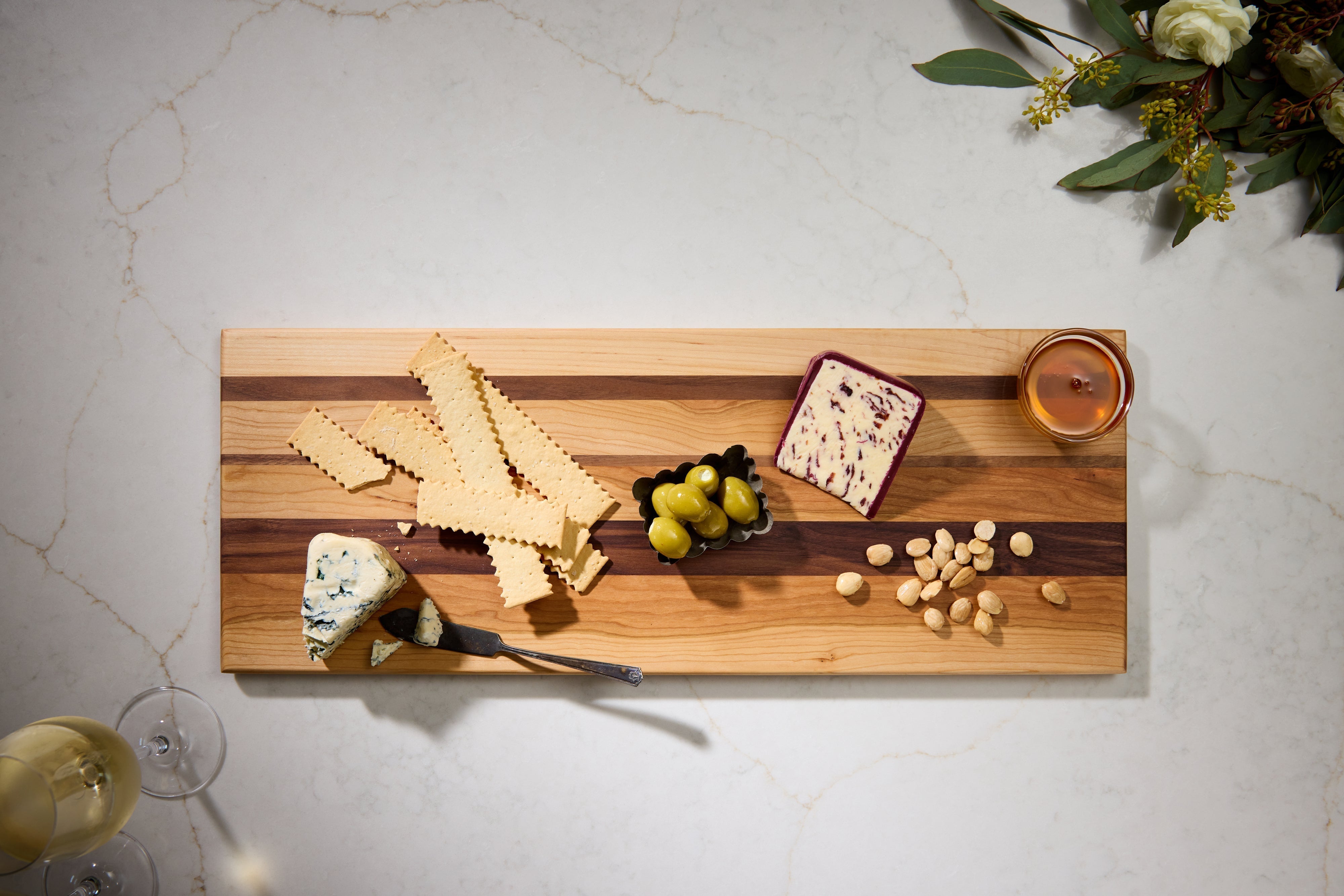
- Elegant for Serving: Many hosts choose walnut boards as charcuterie or grazing surfaces because they photograph beautifully and elevate festive spreads.
- Naturally Antimicrobial: Tannins in the wood help inhibit bacterial growth, contributing to walnut’s reputation as one of the best woods for a cutting board.
When Walnut Is the Best Choice
A walnut cutting board is ideal if you want a functional board that also serves as décor, bringing warmth and richness to your kitchen even when it’s not in use. It’s especially well-suited for those who frequently assemble charcuterie spreads, dessert boards, or grazing platters, since walnut’s deep tones create a beautiful backdrop for food presentation.
If you naturally gravitate toward darker, warm-toned woods and love modern, rustic, or luxury kitchen aesthetics, walnut will feel right at home on your countertop. It’s also the perfect choice if you're considering a personalized charcuterie board for gifting or entertaining, as the wood’s dramatic grain makes engraved details look even more refined and meaningful.
For many customers, walnut represents quiet sophistication, especially in handcrafted designs where the grain truly shines.
Maple Cutting Boards: Features, Benefits & Best Uses

Characteristics of Maple Wood
A maple cutting board is everything a kitchen workhorse should be: durable, bright, clean, and resilient. Its fine, tight grain means bacteria have fewer spaces to hide, making it one of the safest cutting board material choices available.
Maple is harder than walnut, which contributes to its longevity. It takes daily chopping extremely well and resists staining better due to its pale tone and grain structure.
Pros of Maple Cutting Boards
- Long-Lasting Durability: If maintained, maple boards can last decades, even in heavy-use kitchens.
- Stain Resistance: Its lighter colour hides fewer imperfections and helps you see when cleaning is needed.
- Chef-Approved: Maple has long been the preferred board material in professional kitchens thanks to its strength and reliability.
- Versatile Appearance: Its soft, neutral tone blends effortlessly into modern, Scandinavian, farmhouse, or minimalist interiors.
When Maple Is the Best Choice
Choose maple if you prep meals daily and need a strong, resilient cutting board that can handle constant use without showing wear. Its bright, clean appearance suits kitchens that favour a lighter aesthetic, and its exceptional hardness makes it a standout choice if longevity is your top priority.
Maple also resists visible scratches and dents better than many other hardwoods, giving it a consistently polished look even after years of chopping. If you want the most classic, universally loved option for everyday cooking, a maple cutting board is the one that fits naturally into your routine. Maple remains the gold standard for professional chefs and its durability proves why.
Check out our Unique Cutting Board Designs Collection
Walnut vs Maple: Direct Comparison
Here’s a side-by-side look at how walnut and maple perform under key kitchen considerations:
| Feature | Walnut Cutting Board | Maple Cutting Board |
|---|---|---|
| Colour & Aesthetic | Deep, rich, luxurious brown tones | Light, clean, minimalist cream tones |
| Grain Type | Moderately tight; expressive grain | Very tight, closed grain |
| Durability | High, but softer than maple | Extremely high; excellent for heavy use |
| Knife-Friendliness | More forgiving on blades | Slightly harder on knives |
| Stain Resistance | Can show lighter scratches or wear | Excellent, resists staining well |
| Weight | Generally lighter for the same size | Slightly heavier |
| Best Use | Charcuterie, serving, presentation | Everyday prep, chopping, slicing |
| Aesthetic Appeal | Luxury, upscale, dramatic | Clean, classic, timeless |
| Food Safety | Naturally antimicrobial | Naturally antimicrobial; excellent sanitation |
Both woods perform exceptionally well, but they excel in different roles.
Which Wood Is Better for You? Choosing Based on Purpose
Best for Charcuterie & Serving → Walnut
If your board doubles as a centrepiece for hosting, walnut wins. Its colour depth and elegance make it ideal for:
- Christmas charcuterie spreads
- Grazing tables
- Wine nights
- Holiday serving boards
It pairs beautifully with cheeses, chocolates, fruits, and festive décor.
Many of these styles fall under our unique cutting board designs, where craftsmanship, pattern, and material choice come together for both serving and prep.
Check out our Custom Charcuterie Board Collection
Best for Daily Prep Work → Maple
For everyday chopping, slicing, and consistent kitchen use, maple is the stronger choice. Its hardness means the board holds up beautifully under frequent knife contact.
Best for Long-Term Longevity → Maple
Though walnut is durable, maple’s density gives it a slight edge for generational use.
Best for Luxury Aesthetic → Walnut
If your board lives permanently on your counter or you love a kitchen showpiece, a walnut cutting board brings unmatched warmth and sophistication.
For homeowners who care just as much about visual impact as performance, our unique cutting board designs showcase walnut, maple, and mixed hardwood patterns crafted to stand out on the countertop.
How Refined Surroundings Uses Walnut & Maple in Handcrafted Designs
At Refined Surroundings, each handcrafted wooden board is made with intention. These aren’t mass-produced pieces; they’re artisan-level boards built from North American hardwoods, shaped and finished by skilled makers.
Our walnut and maple boards feature:
- Sustainable sourcing: Wood is responsibly harvested, contributing to long-term forest health.
- Food-safe finishing: Boards are conditioned with mineral oil and beeswax, never synthetic varnishes.
- Thoughtful construction: Edges, handles, juice grooves, and live-edge features showcase craftsmanship tailored to real kitchen use.
- Combination boards: For those who want the beauty of both worlds, our mixed-wood designs (walnut, maple, and cherry) create stunning patterns that function beautifully as charcuterie boards or serving trays.
Walnut vs Maple Cutting Board: Which One Belongs in Your Kitchen?
You truly can’t go wrong when choosing between walnut vs maple cutting boards. Both are premium hardwoods, both are safe, and both elevate any kitchen they enter.
Choose maple if you want a long-lasting workhorse for daily cooking. Choose walnut if you want warmth, beauty, and a serving board that doubles as art.
Your board is more than a surface, it’s a companion in your cooking journey. And with the handcrafted designs from Refined Surroundings, you’re investing in something built to serve for years while enhancing the ritual of every meal.
Explore Refined Surroundings' Handcrafted Wooden Boards
FAQs: Walnut vs Maple Cutting Boards
Is walnut or maple better for a cutting board?
Both are excellent. Walnut is best for serving and presentation, while maple excels in daily food prep thanks to its superior hardness.
Which wood lasts longer: walnut or maple?
Maple generally lasts longer due to its density, though both can last decades with proper care.
Do walnut cutting boards stain more easily?
Walnut can show lighter scratches or markings over time, but many owners appreciate this patina. Maple is more resistant to staining.
Are walnut and maple both food-safe?
Yes. Both woods are naturally antimicrobial and considered among the safest cutting board materials.
Can you use walnut or maple boards for raw meat?
Yes, just clean promptly with warm water and mild soap. Their tight grains discourage bacterial growth.
How do I maintain each board?
Oil monthly with food-grade mineral oil. Avoid soaking or dishwashers. Store with airflow around the board.


Leave a comment
This site is protected by hCaptcha and the hCaptcha Privacy Policy and Terms of Service apply.